Posts Tagged "kenya"

Changes

Posted on Apr 11, 2012

As I prepared to go to India on behalf of RSWR for the first time, friends often told me that the trip would be a life changing experience. At the time, I was resistant to the idea that one trip could be powerful enough to change my life. Today as I prepare to end my work as Program Director for RSWR, I realize that trip, along with other trips to India, Kenya, Sierra Leone and all that has touched me in my 9 years at RSWR, have changed my life.

I began working for RSWR 9 years ago when the organization was having difficulty finding someone to fill a four hour per week position to assist in processing grant proposals. It was difficult to find and keep someone who was available to work such a small amount, and who would have care and commitment for the organization. For the previous 10 years, I had lived daily seeing my husband’s ( Roland Kreager, RSWR’s General Secretary) deep love for and commitment to RSWR. It seemed that at least half of our daily conversations centered on RSWR. I was a psychotherapist with a private practice and was, at the time, clerk of my Yearly Meeting. Why not take on another project!

Little did I know that this small project would grow in my heart and change my life.

My first trip on behalf of RSWR was actually to Kenya in 2003. I had worked for the organization for about a year, and decided to use my own resources to travel with Roland to visit with Yearly Meetings in Kenya. RSWR was in the process of introducing ourselves to Kenyan Friends after the board had approved developing programs among USFW women in Kenya. Although I had lived in Germany for a while, traveled a good bit and currently was a city dweller in Cincinnati, there still was a large portion of the small town Kentucky girl in me. For some years I’d felt that my world view was small and that I would like to live for a time in the developing world to ease my parochialism and to explore how I might be called to live more fully in a manner of equality and solidarity with the poor.

My only experience of walking with the poor had been a time some years before when I had some engagement with the poorest neighborhood (Over the Rhine) in the inner city of Cincinnati. That small stretch of time brought me some very limited glimpses into the struggles and joys of that community. But traveling to Kenya gave me a glimpse into a world of poverty and struggle I had never witnessed.

On our first full day of rest and recuperation from our flight, Roland and I decided to take a Sunday afternoon stroll along the streets of Nairobi. We set out from the guest house to walk to Kenyatta Park in the heart of the city. The street was teeming with people walking, vendors hawking their wares and young men trailing us to urge us to purchase tickets for their “safari”. I felt like a tiny fish swimming against the tide in unknown waters.

The most unexpected part of this walk, however, was the scores of small children in dirty, tattered clothing who followed us begging for money, grabbing our hands and pulling at our clothes. In my involvement in Cincinnati’s inner city, I had seen many poor children, but all lived with some family members and were in some ways cared for. Never had I seen 4 and 5 year old babies wandering about the streets begging for food and money. Never have I experienced the emotional drain and helplessness I felt on that walk.

I came home with a new sense of poverty’s oppression in the faces of these small children.

In India two years later, I met a boy in a hotel restaurant in Pudukkotai. He appeared to be 10 or 11 years old. Every morning when I went down for my breakfast and evening when we ate our late night meal, the boy was there in his dirty white shirt and blue shorts. He always smiled as he set the banana leaf plate in front of me and as he cleaned the neighboring tables with his brush and bucket of water. The only language we shared were our smiles, so I do not know this boy’s story but I expect it is like the stories of many children in India who work in cities and live apart from their families who do not have enough money to feed and send them to school

For each of the seven trips to the developing world that I have made in the past nine years, I have a memory of a child living in poverty and doing work not meant for a child so that he or she might eat. I also have memories of children in school uniforms; children enacting stories about the tsunami that hit their shores and killed friends and relatives; children holding out their hands to a strange white woman and running by the car happily calling out to the strangers riding along their rutted roads.

These children, their mothers and fathers have changed me. The strong, compassionate and committed men and women who work on behalf of the poor in their countries have changed me. The wise men who serve RSWR as in-country field staff have changed me. I cannot ignore the face of poverty. I have come to deeply believe that it is necessary for those of us who have plenty to work toward economic justice for those who do not have enough. I have learned about micro credit and have seen the power of one small grant in changing the life of a woman and her family. I have more fully understood that personal empowerment for women can positively change the face of an entire community.

I have also seen over and over the power of women (and sometimes men) working together as a group. One of RSWR’s criteria for funding a project is that the women must be organized in a group of support. The guiding principle behind this criteria is that the group offers support and accountability. Over and over I have seen and heard the stories of women in their groups: stories of how women supported one another after the Tsunami or other crises; stories of how they supported one another in repaying their loans; stories of how the members appealed to and received help from their group in dealing with domestic violence. I have seen women leaders rise up in leading NGOs in India; women being elected to local public office; and women appealing to government authorities for their rights.

I carry these changes in my heart and look forward to how God will call me to manifest these changes for which I am incredibly grateful. I think of the song we sometimes sang at my Quaker Meeting in Cincinnati: “Step by step the longest march can be done; Many stones can build an arch, singly none. And in union what we will, can be accomplished still.” (“Rise Up Singing”)

Cindi Goslee

RSWR Program Director

Crushing Poverty and the Hope of RSWR

Posted on Jan 24, 2012

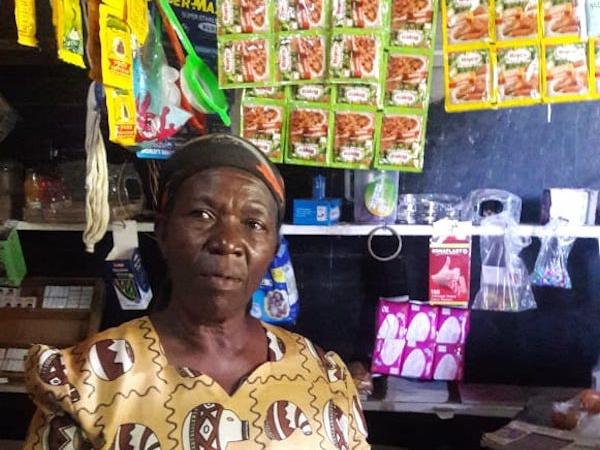
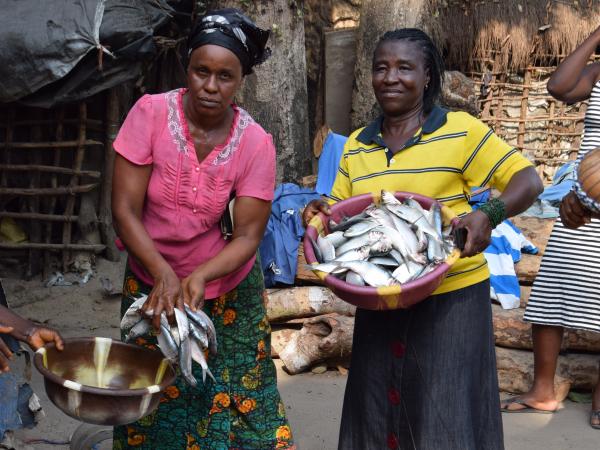
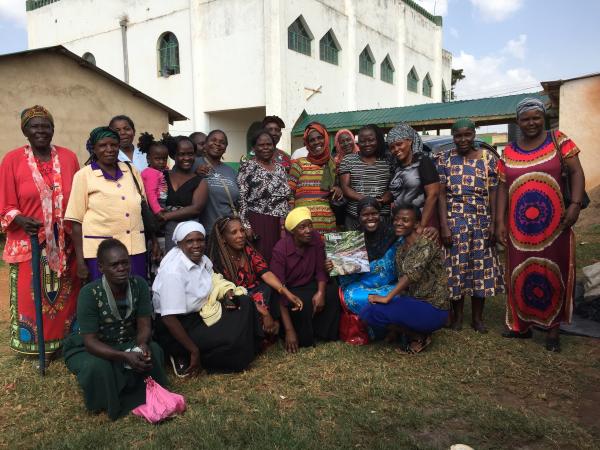
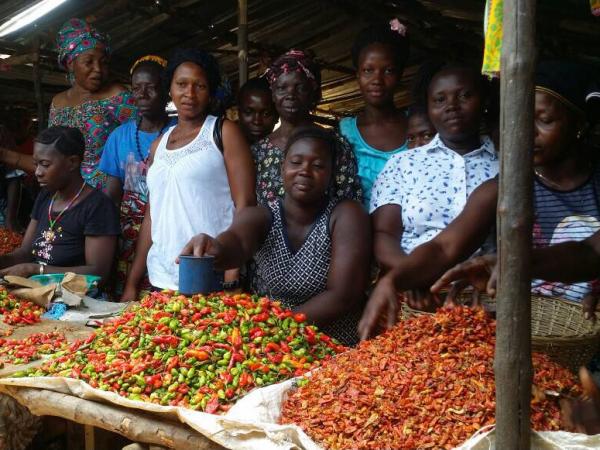
In May 2011, RSWR field staff, Samson Ababu, and I (Program Director, Cindi Goslee) were driving along a roadway in Kenya having just completed several visits with RSWR project partners over the past week.  It had been a wonderful trip with many strong women doing very good work.  We had walked through small towns, chatting with young men preening by their motorcycles for hire, greeting children who followed us and  meeting with our project partner group members at their vegetable stalls or stores. We had visited with women as they displayed and described numerous income-generating projects.  We had also conducted a symposium with over 100 women project partners in which they shared their accomplishments and struggles. It was a joyous drive in which we stopped to admire a mama and baby baboon along the roadside and to laugh with a group of young men washing their motorbikes in a natural spring.

As we rounded a bend in the road, we saw a young boy sitting atop a pile of stones on the roadside.  Samson stopped the car and we walked over to the child who was 7 or 8 years old.  The little boy had a small pick hammer with which he was breaking the stones into smaller pieces.  He was preparing the  broken gravel for construction use to sell to lorry (truck) drivers along the roadway.  As Samson took the child’s hammer to give stone crushing a try, a boy a bit older (perhaps 9 or 10) walked up. He was the younger boy’s brother.

Samson asked the boys why thy were not in school.  The smaller child replied that they had no money for school uniforms, books or fees.  When asked if they had eaten that morning, he said they had not. As the children’s mother appeared from the village below, Samson returned the hammer to the child, exclaiming that stone crushing was a very hard job.

He and I dug in our pockets for some cash and I into my backpack for a some almonds.  Cash in hand, the mom left to purchase some maize for breakfast and the children munched on the almonds.  Samson and I drove on with an even deeper appreciation of the work of the groups we had just visited.  With the determination and hard work of the group members and with RSWR’s grant, those women’s children were able to go to school with breakfast in their bellies that day.

We also drove with a heaviness of heart for the family we had just met and the knowledge of  children in Kenya (and around the world) whose families cannot afford to feed and send them to school.  My prayer is with those thousands of children with no food in their bellies, no means to attend school and the requirement to do back breaking work to help their families.  It is also with the efforts of RSWR and other organizations who are working to bring forth economic justice in this world of enormous economic disparity and injustice.

Using Financing for Change

Posted on Nov 16, 2011

My name is Silviano Valdez and I am a sophomore at Earlham College and a Bonner Scholar intern at Right Sharing of World Resources. I spent this summer with ThinkImpact, a program that teaches graduate and undergraduate students about social entrepreneurship in rural parts of Africa. With a colleague from ThinkImpact I started social business called Vuwa (water in Swahili) Enterprise in a small eastern Kenyan village. The project was heavily influenced by what I have learned interning with Right Sharing of World Resources. As in micro-finance, Vuwa Enterprise is able to make its service and products affordable through financing.

Vuwa Enterprise installs water catchments and storage systems on tin roof houses in areas subject to drought. For $20 Vuwa is able to install a 10-foot gutter system and 100-liter storage tank, and can educate a family about the prevention of waterborne diseases. In eastern Kenya women sometimes spend their whole day walking miles, carrying 20 liter jugs of water on their heads. When I was in the village of Chanagande the nearest wells ran dry twice, and the women had to walk even further. I wrote in my journal,  “ I don’t know what is worse, seeing these women’s tired faces, or knowing that the water they were working so hard to take back to their families could causes diseases like typhoid or cholera.”

Vuwa’s rain catchments system and the Water Diseases Prevention Training helps families overcome these social challenges. However $20 is too expensive for Kenyans, who are living in poverty, unless the product is financed over 6 months. Therefore, we established a repayment plan and revolving loan system. After the installation of our product, a loan officer picks up a customer’s small weekly payment. In addition, the loan officer will provide a 6-month supply of Waterguard, and teach families how to use this water treatment which prevents waterborne diseases. The idea is that a family will continue to use this locally accessible treatment after our training and will be able to witness the change in their health.

Right Sharing of World Resources helped me realize the power of affordable financing for the poor. Even the poorest or the poor can afford to pay off a loan over a period of time. Instead of financing products, Right Sharing of World Resources helps finance women’s loans to start micro businesses. These businesses empower women, and tackle poverty by increasing income. This is possible because of people who are willing to take a chance on lending to the poor, who have been traditionally been perceived as too risky an investment. Right Sharing of World Resources has been committed to changing this view for the past 30 years and believes that economic empowerment of the poor through micro-credit has enormous potential to create positive social change.

I feel that Vuwa Enterprise is building off the model of  Right Sharing Of World Resources.  By giving the poor the ability to obtain credit they will increase access to tools to tackle social issues that effect their lives, such as access to healthy water supplies. Vuwa Enterprise’s model has taught me that the change-makers can use this model not only to help solve issues of water, but other types of global development issues. Hopefully as time goes by we will see more and more social business and non-profits using creative financing as tool a to overcome some of the greatest challenges that our generation faces today.

Ugali is one of the staple foods in East Africa where we center a large percentage of our m

Posted on May 26, 2011

Ugali is one of the staple foods in East Africa where we center a large percentage of our microfinance projects.  So today, we bring you a short video about the making of this delicious cultural dish.

Sandy Davis, Friend and former Kenyan transplant writes:
 

The main staple food is ugali (pronounced “00-golly”) which is only water and maize flour.  Cooks in Western Kenya do not have measuring cups or spoons so they guess at proportions needed.  For the ugali, heat a certain amount of water in a large kettle over the fire.  The amount depends on how many people they will feed.  When it boils, enough maize flour is added to absorb all the water and make a solid “cake” of ugali.  It is then turned out of the rounded bottom of the pan onto a plate after being packed down hard.  It is then a mound on the plate.  Each person uses the communal knife to cut off a hunk of it for themselves.  Portions are pinched off with the fingers and molded and packed in the hand with a final indentation made with the thumb to form a spoon.  This is used to spoon up the greens or other broth and meat.

 Ugali is a yummy, chewy meal that compliments most anything.  If you give it a try at home, send us your pictures:  media@rswr.org

Meet more Right Sharing of World Resources ben

Posted on Apr 21, 2011

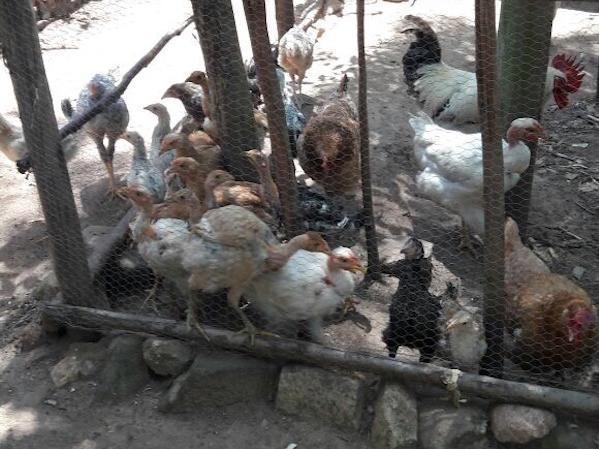
Florence Boge raising chickens for sale

Esther Otiende selling soybeans

Beatrice Anakase with grains & firewood

Meet more Right Sharing of World Resources beneficiaries!  

We got a note of thanks and appreciation, but truly that goes to you, our supporters, for donating to women and projects like these.

Florence, Esther and Beatrice are from Lusuka Friends Women’s Group in Kenya, East Africa.  In Kenya, we work with Quaker women, and these women belong to Vihiga yearly meeting.  

The three women pictured are part of a group of 30, engaged in the cultivation and selling of beans and grains, alongside some side projects, such as the selling of chickens and firewood.  (You can see evidence of this in the pictures.)

The women have set a goal of saving $3 a month in order to create a revolving fund that would bring in more women and more business growth.

A little goes a long way!

Please continue holding Florence, Esther, Beatrice, the whole of Lusuka Friends Women’s Group and our other project partners in the Light.