
Our History
Fifty years of faith, equity, and shared resources
Right Sharing of World Resources (RSWR) began as a simple yet radical idea: that love calls us to share the world’s abundance more justly.
In 1967, at the Fourth World Conference of Friends in Greensboro, North Carolina, Quakers from around the globe were moved by a deeply inspiring experience of corporate leading. Together, they affirmed that the world’s vast inequities could no longer be tolerated by a people committed to equality and love.
From that gathering grew a movement that continues to this day.
God calls us to the right sharing of world resources — from the burdens of materialism and poverty into the abundance of God’s love.
— RSWR Mission Statement
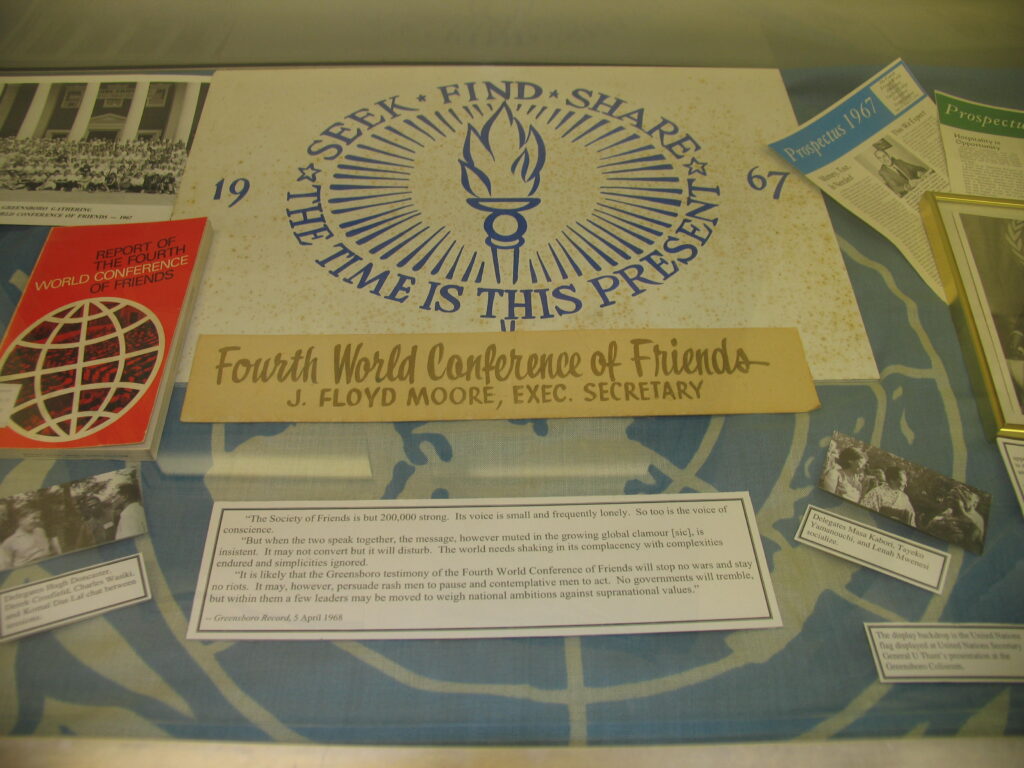
The Seeds of a Movement
In the years leading up to 1967, British Friends Maisie and Walter Birmingham urged Quakers to live modestly and give generously in their essay, Christian Responsibility for the Use of Natural Resources. Their call became the seed of the Right Sharing concern, linking faith, simplicity, and economic justice.
This concern took root at the Guilford Conference, where 900 Friends representing six continents united behind the conviction that sharing resources was a moral and spiritual imperative.
Is it now time that Friends worked out their common testimony to the right use of the world’s resources?
— Maisie & Walter Birmingham, 1965
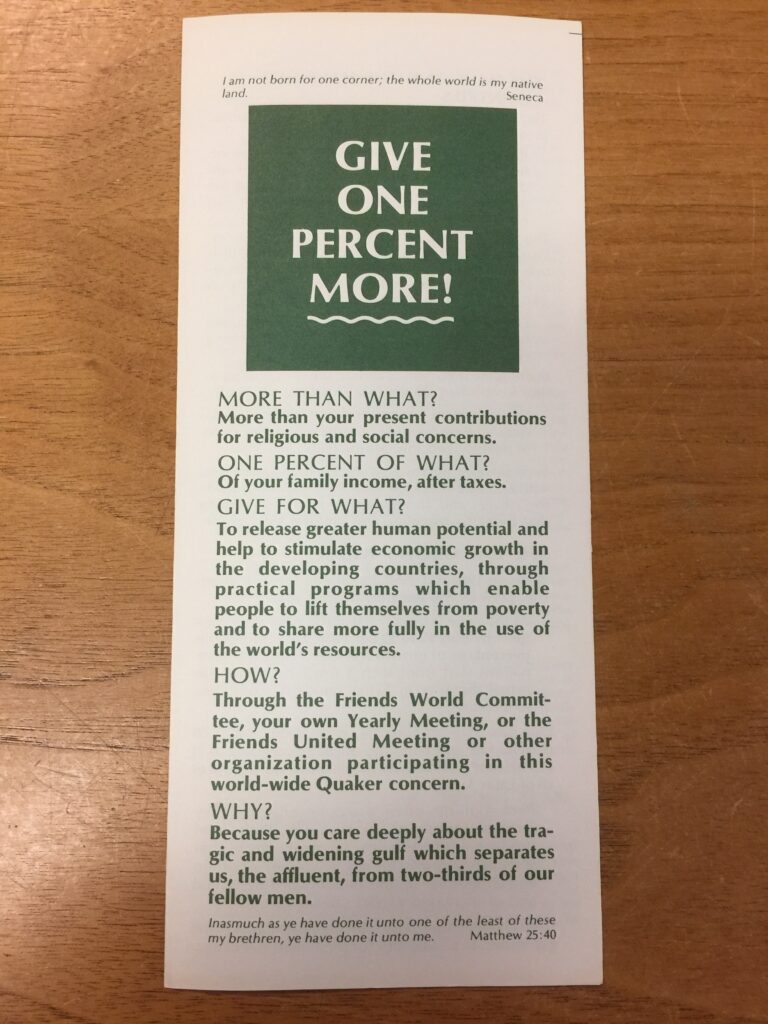
Timeline of Right Sharing
1967 — The Call to Action
The Fourth World Conference of Friends issues a landmark statement, “People, Food, and the Sharing of Resources—A Vision for the Future.” It becomes the foundation of Right Sharing.
1968–1970 — The 1% Fund
Friends World Committee for Consultation (FWCC) launches the One Percent More Fund, inviting Friends to contribute 1% of their income to projects supporting people in developing nations. Early initiatives include microenterprise programs in Kenya, India, and Guatemala.
1972 — RSWR Takes Shape
The program formally becomes Right Sharing of World Resources, emphasizing both global partnership and personal transformation—encouraging Friends not only to give, but to live more intentionally.
It is sharing, not foreign aid. Through its practice we learn from those of other lands and thus learn to live a fuller life.
— Keith Smiley, 1978
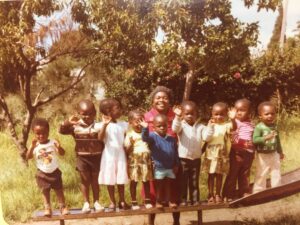
1973–1990 — Growth and Witness
RSWR expands across continents, supporting grassroots women’s groups and offering small grants that grow livelihoods and leadership. The first newsletters, study guides, and educational games are created to engage Friends in reflection and action.
1999 — Becoming Independent
After decades under the care of FWCC, RSWR becomes an independent Quaker nonprofit, continuing the same mission with a renewed focus on women-led microenterprise projects.
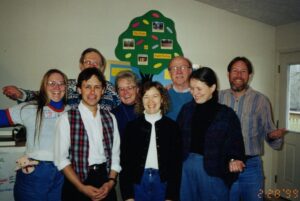
Today — Building from a Solid Foundation
RSWR partners with grassroots women’s groups in Guatemala, India, Kenya, and Sierra Leone, offering small grants and training that help women build sustainable livelihoods, strengthen their communities, and live with dignity.
People of many faiths and no faith join RSWR in working toward more equitable global wealth distribution – and living simpler lives. Although RSWR is a Quaker nonprofit, neither religion nor faith are criteria for a women’s group to partner with RSWR.
Through five decades of change, one truth has remained constant: A little shared in love can go a very long way.
See how RSWR continues this work today through learning about Our Approach.